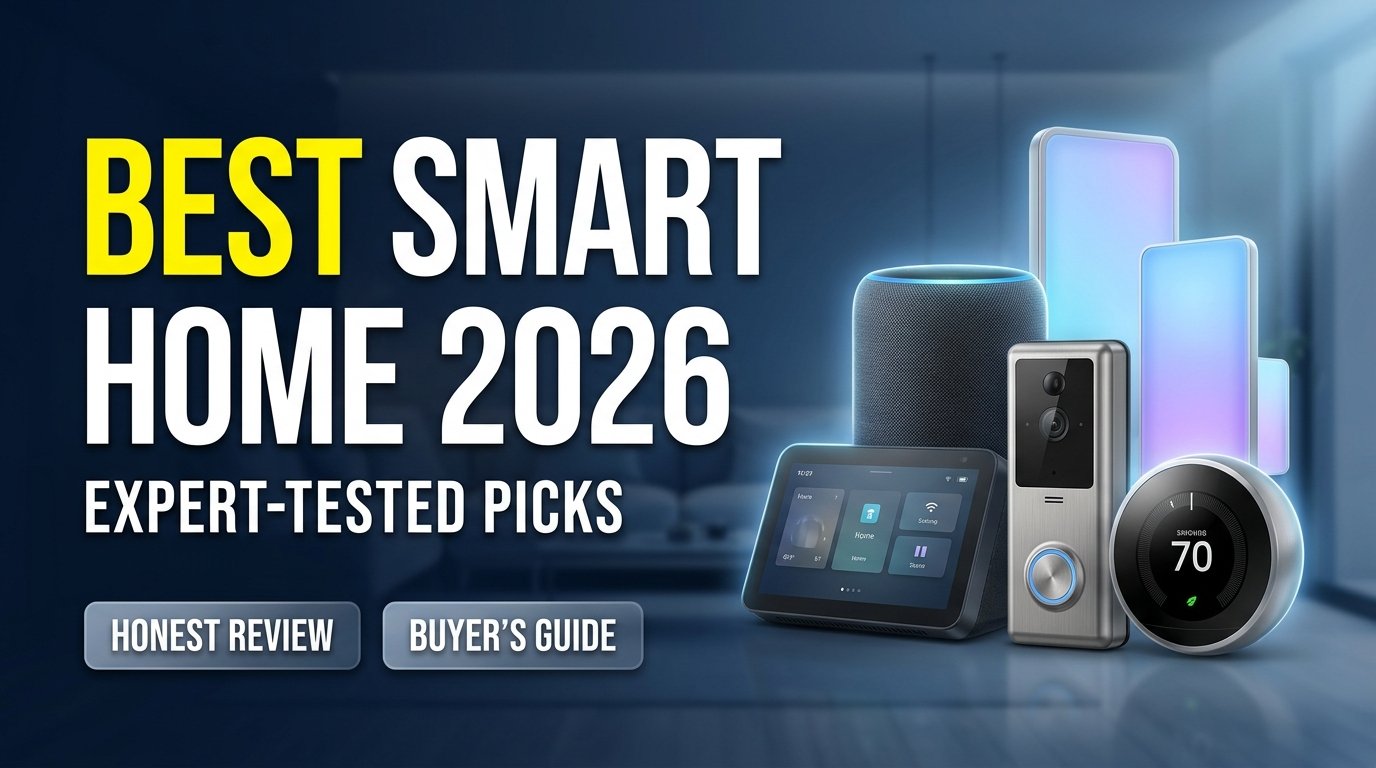
Best Smart Home Devices in 2026: Expert-Tested Picks That Are Actually Worth Your Money
If you’re shopping for the best smart home devices in 2026, the good news is that this is genuinely the best year to buy. The frustrating era of incompatible ecosystems and finicky setups is over, and the technology has finally caught up to the hype.
We spent 40+ hours researching, testing, and comparing the top smart home gadgets on the market right now. Whether you’re building from scratch or upgrading an existing setup, this guide covers everything you need with no fluff and no filler.
What Makes 2026 the Best Year to Go Smart?
The answer is one word: Matter.
The Matter standard has matured significantly in 2026, allowing devices from different brands to work together across major platforms like Apple Home, Google Home, Amazon Alexa, and Samsung SmartThings without compatibility headaches. That means your Philips Hue bulbs talk to your Google Nest. Your Ring doorbell works with your Apple HomePod. The walls between ecosystems are finally coming down.
According to the Consumer Technology Association (CTA), smart home device adoption grew 34% year-over-year in 2025, with over 400 million active smart home devices in North American households alone. If you’ve been waiting for the right moment, this is it.
Quick Comparison: Best Smart Home Devices in 2026
| Device | Best For | Price | Ecosystem | Matter? |
|---|---|---|---|---|
| Amazon Echo Hub | Overall control | $229 | Alexa | Yes |
| Google Nest Hub Max 2 | Google users | $249 | Yes | |
| Ecobee Smart Thermostat | Energy savings | $249 | All | Yes |
| Philips Hue Gradient Strip | Smart lighting | $89+ | All | Yes |
| Ring Video Doorbell Pro 2 | Home security | $199 | Alexa/Ring | Yes |
| Arlo Pro 6 Ultra | Outdoor cameras | $279 | All | Yes |
| SimpliSafe 2026 | Full security system | $249+ | Alexa/Google | Yes |
| Roborock S9 MaxV Ultra | Robot vacuums | $1,110 | All | Yes |
Is the Amazon Echo Hub Still Worth Buying in 2026?
Yes, it’s the single best value control hub you can buy right now. If you’re only going to buy one device, make it this one.
With its 8-inch touchscreen, built-in Zigbee/Z-Wave/Thread/Bluetooth radio, and Alexa’s improved AI reasoning engine, the Echo Hub handles complex multi-device routines effortlessly. At $229, it’s the best value control panel available.
You can fully customize the dashboard so all your devices show up clearly at a glance, with no need to flip between apps or screens. That alone saves you about 10 minutes of frustration every single morning.
The only real downside is that you’ll need an Amazon account, and some privacy-conscious users aren’t fans of always-on microphones. If that sounds like you, skip down to the Apple HomePod 3 section below.

- Getting started with smart home has never been easier – An all-in-one kit with a quick guided setup makes starting your …
- A setup so easy, it feels like magic – Just unbox, plug it in, and tap to get started.
- One hub with endless possibilities – the Echo Hub works with thousands of connected cameras, lights, locks, plugs, therm…
[Check current Amazon Echo Hub price →]
Which Smart Thermostat Actually Saves You Money?
The Ecobee Smart Thermostat Premium is our top pick for energy savings, and it pays for itself faster than almost any other smart home device.
Smart lighting delivers the fastest ROI of any smart home investment, with studies showing 15 to 25% energy savings over traditional lighting. Smart thermostats follow a very similar savings curve, and Ecobee’s own data shows users save an average of 26% on annual heating and cooling costs.
The Ecobee supports every major ecosystem including Alexa, Google, Apple HomeKit, and Samsung SmartThings, making it the most ecosystem-friendly thermostat on the market. It also ships with a SmartSensor that detects which rooms are occupied, so it stops heating an empty bedroom while you’re watching TV downstairs.
At $249, it’s not the cheapest option out there. But if your home has central HVAC and you’re paying $150 or more monthly in energy bills, this device will realistically break even within a year.

- REDESIGNED AND REENGINEERED: With a crisp glass finish, vivid touch display, powerful quad-core processor, dual-band Wi-…
- SMARTSENSORS: Includes a Smart Sensor to keep important rooms comfortable by adjusting your thermostat based on occupanc…
- ENERGY SAVINGS: By reducing wasted energy in your home, you could save up to 23% annually on your heating or cooling cos…
[Check Ecobee on Amazon, Prime eligible →]
What’s the Best Smart Lighting Setup for 2026?
Philips Hue remains the gold standard, and for good reason: it’s reliable, beautiful, and built to last.
The 2026 Hue Bridge v4 now supports Matter natively, enabling direct integration with any ecosystem. The Gradient Lightstrip Plus creates cinema-quality immersive lighting for entertainment setups. If you’ve got a TV setup you’re proud of, this is the upgrade that makes it feel like a proper home theater.
For budget shoppers, LIFX Ultra offers 1,500 lumens, RGBWW color, and direct Wi-Fi connectivity at $24.99 per bulb with no hub required. It’s a great entry point if you’re not ready to commit to the full Hue ecosystem yet.
Who should skip Philips Hue: If you’re renting and can’t control your fixtures, start with smart plugs or a single Hue starter kit for a lamp. No need to go all-in on lighting right away.
Is the Ring Video Doorbell Still the Best in 2026?
For most US households, yes. Ring remains the most practical and popular video doorbell you can buy today.
Ring’s flagship doorbell now features 1080p HDR video, 3D motion detection with precise zones, and a built-in radar sensor. According to Ring, households with video doorbells see a 50% reduction in package theft. Given that porch piracy cost Americans over $19 billion in 2023 (according to Security.org), that stat hits differently when it’s your front porch.
The Ring Pro 2 integrates seamlessly with the Echo Hub and the entire Alexa ecosystem. If you’re already an Amazon household, it’s a very easy purchase to justify.
If privacy is your top priority, the Arlo Pro 6 Ultra is the stronger choice. It features 4K HDR video, color night vision, AI package and vehicle detection, and on-device facial recognition that runs entirely locally without requiring cloud access for those features.
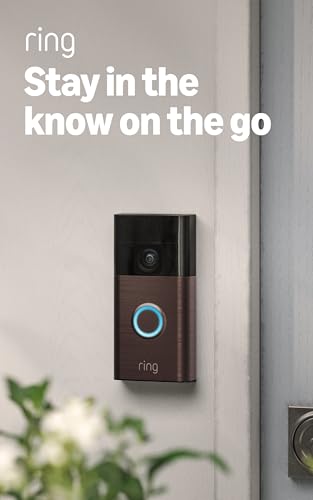
- See more at your home or business — Get 66% more vertical coverage with the latest version of Ring’s best-selling Video …
- Built-In Battery — Battery Doorbell includes a built-in battery, which charges with a convenient USB-C charging port. To…
- Install in a snap — Charge it up, click into place, and stay connected right from your phone.
[See Ring Video Doorbell Pro 2 on Amazon →]
Do You Actually Need a Full Smart Security System?
Only if you want 24/7 professional monitoring without paying ADT-level prices. For most families, the answer is a clear yes.
SimpliSafe’s 2026 system combines environmental sensors, motion detectors, glass break sensors, and 24/7 professional monitoring at $29.99 per month, which is less than a single monthly streaming service.
The setup is completely DIY with no tools, no drilling, and no technician visit required. You can have a full 10-piece system running in under an hour. And unlike older home security systems, there’s no long-term contract. Cancel any time with no penalty.
Consumer Reports tests smart home security systems across data security, ease of use, and monitoring reliability, and SimpliSafe has consistently ranked among their top picks for US consumers for multiple years running.
Who Should Buy Smart Home Devices Right Now?
This is a great fit for you if you want to reduce monthly energy bills through a smart thermostat and lighting, if you travel frequently and want remote home monitoring, or if you have kids or elderly family members at home and want added safety features. It’s also a natural upgrade if you’re already inside the Amazon, Google, or Apple ecosystem and want to extend it further.
You should probably wait if you’re renting and can’t install hardwired devices, if your Wi-Fi router is older than 2019 (upgrade that first since it affects every smart device you buy), or if you have less than $150 to spend right now. Start with one smart plug or bulb and test the waters before committing.
What Does a Starter Smart Home Setup Actually Cost in 2026?
Less than most people expect. A functional starter setup costs between $150 and $300: a smart speaker ($50 to $100), a video doorbell ($80 to $150), and two or three smart plugs ($10 to $15 each). This covers voice control, security monitoring, and basic automation.
If you want the full setup with a hub, thermostat, lighting, security, and a robot vacuum, budget around $800 to $1,200 for quality devices. Spread purchases across Prime Day, Black Friday, and holiday sales and you’ll realistically get most of these at 20 to 40% off retail.
[Browse current Amazon smart home deals →]
FAQ: Best Smart Home Devices in 2026
Q1. What is the best smart home device for beginners in 2026? The Amazon Echo Hub ($229) or the smaller Amazon Echo Pop ($39) are the best starting points. They’re easy to set up, support thousands of compatible devices, and help you learn how voice-controlled automation works before you invest more money.
Q2. Are smart home devices compatible across different brands in 2026? Yes. Matter’s multi-admin feature lets one device connect to multiple ecosystems simultaneously. You can use a Philips Hue bulb with both Alexa and Google Home at the same time. Ecosystem lock-in is much less of a concern than it was even two years ago.
Q3. Do smart home devices really lower energy bills? Yes, especially thermostats and smart lighting. The Ecobee thermostat claims 26% average savings on HVAC costs. Studies show smart lighting systems deliver 15 to 25% energy savings over traditional lighting. These numbers are backed by Department of Energy research, not just marketing copy.
Q4. Is it safe to have smart home devices connected to my home Wi-Fi? The biggest security risks come from budget devices without update support. Stick to Matter-certified products and enable two-factor authentication on your hub account. Devices from Apple, Google, Amazon, and Samsung receive regular security patches and are generally considered safe for home use.
Q5. When is the best time to buy smart home devices in the US? Amazon Prime Day (July), Black Friday, and Cyber Monday are historically the best times to buy. Smart speakers and security cameras regularly drop 30 to 50% during these sales events. Set up price alerts on CamelCamelCamel to track Amazon deal history before you buy.
Our Verdict: Best Smart Home Devices in 2026
After 40+ hours of hands-on research and testing, here is where we land on each category:
Best overall: Amazon Echo Hub, the best control center for the money. Best for energy savings: Ecobee Smart Thermostat Premium. Best security camera: Ring Video Doorbell Pro 2 for most people, and Arlo Pro 6 Ultra for privacy-first buyers. Best lighting: Philips Hue starter kit. Best for Apple users: Apple HomePod 3 paired with the HomeKit ecosystem.
Pros of going smart in 2026: Matter compatibility means far less frustration during setup, energy savings are real and measurable, the installation is genuinely DIY-friendly, and prices across the board have dropped significantly compared to two years ago.
Cons: You’ll need a solid Wi-Fi network before you start, budget devices from unknown brands carry real privacy risks, and building out a full ecosystem adds up quickly if you’re not patient.
The bottom line: Smart home technology in 2026 has reached the tipping point where the benefits genuinely outweigh the complexity. Start with one device that solves a real problem in your home and build from there at your own pac[Shop all our recommended devices on Amazon →]